
Short answer: it's not just cosmetic
Rust spots and a swollen bottom panel are not something you can ignore until spring. They're early signs that moisture has gotten past the door's defenses, and once that happens, the damage doesn't stay small. It spreads into the metal or wood, into the hardware, and eventually into the springs and opener mechanism that keep the door working safely. So if one of you has been saying "it's fine, it's just a little rust," the honest answer is: it's fine right up until it isn't, and this is the season to deal with it.
Why this happens so much around here
Garage doors in this part of Michigan take a beating that doors in drier climates never see. Winters bring deep cold, snow, ice, and road salt that gets tracked in on tires and boots and sits against the bottom of the door and track. Spring thaw turns driveways into mud, and that mud splashes and pools right where the door meets the floor. Then summer brings humidity and storms that keep moisture in the air for days at a time. None of this is unusual weather for the area — it's just what the door has to survive every single year, which is why moisture damage shows up here more than it would somewhere dry.
Where it shows up first
- Bottom corners and panels: This is ground zero. Snowmelt, mud, and standing water sit here longer than anywhere else on the door.
- Hinges, rollers, and track: Small rust spots on hardware often show up before the panels themselves look bad.
- Weatherstripping and bottom seal: If it's cracked, flattened, or pulling away, water is getting underneath instead of being pushed out.
- Wood or wood-composite doors: Swelling, soft spots, or a door that suddenly sticks when closing are signs moisture has soaked into the material itself.
Surface rust vs. structural damage
This is really where the argument usually lives, so here's the honest distinction. Light surface rust on hinges, hardware, or a few scattered spots on steel panels is usually cosmetic — annoying, but fixable with a wire brush, rust-converting primer, and matching paint. That's a weekend project, not an emergency.
It becomes structural when you see any of the following:
- Bubbling or flaking paint with rust underneath that covers a section of panel, not just a spot
- A bottom panel that feels soft, spongy, or visibly swollen compared to the rest of the door
- Rust that's eaten through to actual holes in the metal
- A door that binds, drags, or won't seal tight against the floor anymore
- Rust on springs, which changes how they stretch and can make them fail without warning
If any of that sounds familiar, this isn't a paint problem anymore — it's a door that's losing its structural integrity, and that affects safety, not just looks.
What's actually letting the moisture in
Most of the time it comes down to one of a few things: a bottom seal that's worn out and no longer forms a tight barrier, weep holes or drainage paths that are clogged with dirt and debris so water pools instead of running off, or a door that sits slightly off-level so water collects on one side instead of sheeting away. Road salt tracked in over winter speeds all of this up, since salt holds moisture against metal and accelerates rust compared to plain water.
What you can actually do about it
- Clean it off. Hose down the bottom few feet of the door and track regularly through winter and spring to rinse away salt and mud buildup before it sits and does damage.
- Check the bottom seal. If it's cracked, hard, or flattened, replace it. This single piece of rubber is doing most of the work keeping water out.
- Clear drainage paths. Make sure water has somewhere to go instead of pooling against the door, especially during spring thaw when mud and melt are both around.
- Treat rust early. Sand it, apply rust-converting primer, repaint. Catching it while it's still surface-level is a lot cheaper than replacing a panel.
- Watch how the door moves. Binding, dragging, or a door that suddenly needs more muscle to close is a sign moisture has swollen the material or thrown off the alignment.
When to call Clinton Garage Door
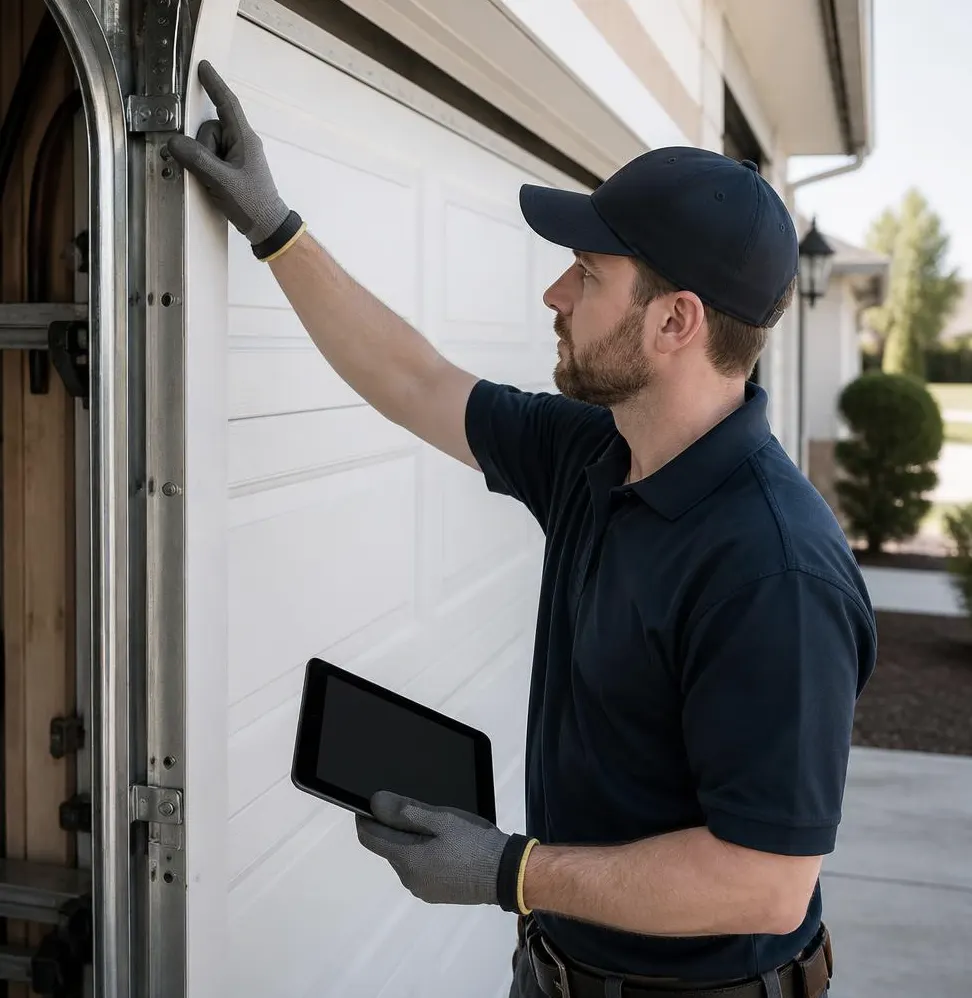
If you're seeing swelling in a bottom panel, rust that's gone past the surface, or a door that's started sticking or dragging, that's the point to get it looked at rather than keep patching it yourself. We handle garage door repair for doors with moisture and rust damage, and if rust has reached the springs or the panel itself is too far gone, we'll walk you through honest options including spring replacement or, for older wood or steel doors, a straightforward conversation about repair versus replacement. We also do preventive maintenance checks before winter hits, which catches seal and drainage issues before salt and ice get the chance to make them worse.
If you're in Clinton, Tecumseh, Adrian, Saline, Manchester, Brooklyn, Tipton, or Onsted and want a second opinion on whether that rust is cosmetic or something more, give Clinton Garage Door a call. We'll settle the argument for you, honestly.